
The practitioner
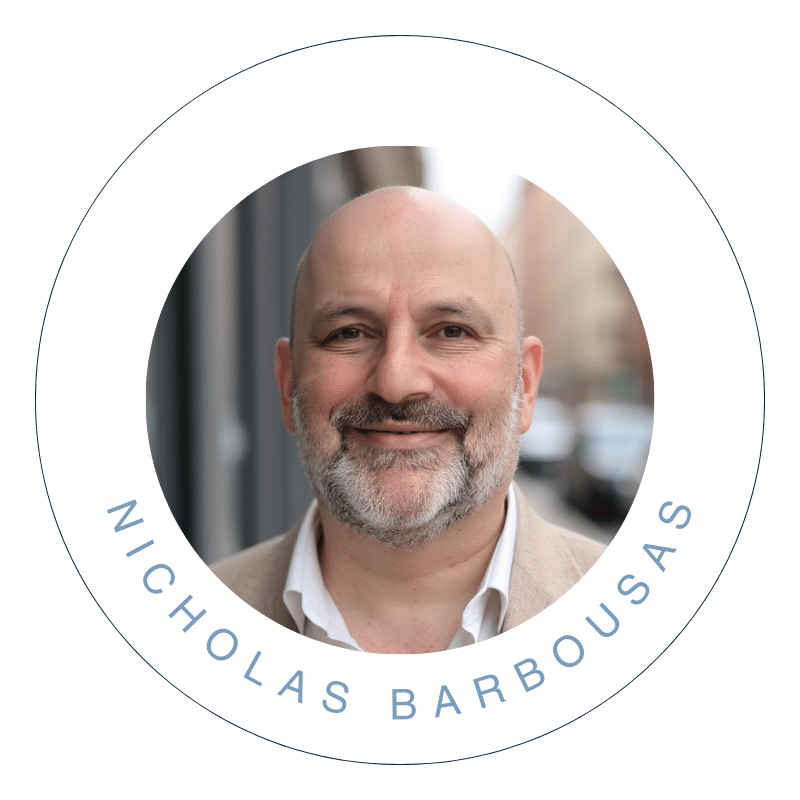
Nicholas Barbousas
Certified Advanced Rolfer
Two careers that have run alongside each other for nearly three decades. One in a treatment room, one in a classroom. Each has kept the other honest.
Two tracks
The room and
the classroom.
Most practitioners do one or the other. Running both means every idea taught has had to survive a table, and every habit formed on a table has had to survive being explained to a room of sceptical postgraduates.
In the room
Rolfing Structural Integration
Trained and certified in the Rolf method, and later certified at advanced level. Structural Integration has remained the core of the clinical work throughout, rather than one modality among several.
Melbourne practice
A single-practitioner clinical practice, working with people carrying long-standing structural patterns rather than acute presentations. The practice now runs from Clifton Hill.
Assessment as the method
Decades of sessions produced a consistent finding. The deciding factor was rarely the technique used, and almost always the quality of the reading that came before it.
In the classroom
Postgraduate teaching
Twenty-seven years teaching manual and movement therapy to practitioners and students at postgraduate level, across university and professional development settings.
Western Sydney University
Inaugural convener and co-developer of the myofascial release program within the osteopathy degrees. Building a program from nothing forces the reasoning to be made explicit, which is where much of the framework work began.
PostureGeek and PostureGeek Learning
Public education through PostureGeek, and continuing education for practitioners through PostureGeek Learning, including the Case Review Clinic where frameworks are applied to live cases.
Teaching forces the reasoning to be said out loud. Clinical work keeps the teaching honest about what actually happens on a table.
Sydney, February 2027
Nick is speaking at the ATMS Fascia Symposium
Nick will present From Symptom to System: Structural Pattern Recognition in the Connected Body, exploring how practitioners can look beyond the site of symptoms, develop useful clinical hypotheses, and test what may actually matter.
The presentation draws on more than 30 years of clinical work and teaching in structure, movement and manual therapy.
Developed in practice
The frameworks
behind the work:
These came out of the two tracks running together, and they are what the practice runs on today.
Clinical triangle
The reasoning engine, in a structural expression and a reasoning loop.
Structural Pattern Recognition
Reading how a structure has organised itself before choosing what to do.
Interconnective Drivers
Following load between regions rather than treating where the symptom sits.
IPAF and RISE
The assessment application and the progression framework that run inside the Clinical Triangle.
Work with Nicholas
Sessions run Monday, Tuesday and Friday at 167 Queens Parade, Clifton Hill.
For practitioners
Learn with Nicholas,
two ways.
One is worked through with you directly. The other you take at your own pace. They cover the same frameworks and suit different stages of a career.
one to one
Mentoring
nicholasbarbousas.com.au
Direct mentoring for practitioners working through their own caseload. Your cases, your reasoning, and the gaps that show up when a pattern does not resolve the way it should.
Structured Courses
PostureGeek Learning
courses.posturegeek.com
Continuing education built on Structural Pattern Recognition, including the Case Review Clinic where the frameworks are applied to live cases with other practitioners in the room.